However, a few prominent critics have been sure to comment on the film's supposed video-game-like qualities: the fantastical computer-generated environments, stylized violence, and action-oriented plot, among others. Unfortunately, the comparisons of 300 to a video game tend to be pejorative rather than praising. Based on these seemingly passive and casual references to video games it is clear at least within the realm of cinema critique that video games are viewed as an inferior art form, and therefore a film which evokes the look and feel of a video game is inferior as well. For example, the LA Times author Kenneth Turan wrote, "unless you love violence as much as a Spartan, Quentin Tarantino or a video-game-playing teenage boy, you will not be endlessly fascinated." The New York Times's A.O. Scott said,
"I would happily pay a nickel less, in quarters or arcade tokens, for a vigorous 10-minute session with the video game that “300” aspires to become."

300 certainly does evoke the look and feel of a video game. Immediately, the immense, detailed, and eye-popping computer generated environments and characters evoke the feeling of an elaborate and massive video game. This is unsurprising, as similar technology is used to create both. However, many shots in 300, including those adapted from the graphic novel, resemble the close, over-the-shoulder look of 3rd-person action games. This is especially true in the film's battle scenes, which frequently follow one or two Spartans through poetically choreographed fights. The violence in the film is depicted, for lack of a better word, artistically--even when depicting brutal death, the film emphasizes the grace of the human body and the hypnotic appearance of fluid (in this case blood) in motion. While this may not necessarily be true for all video games, it is true that video games are designed to capture bodies in motion accurately and beautifully.
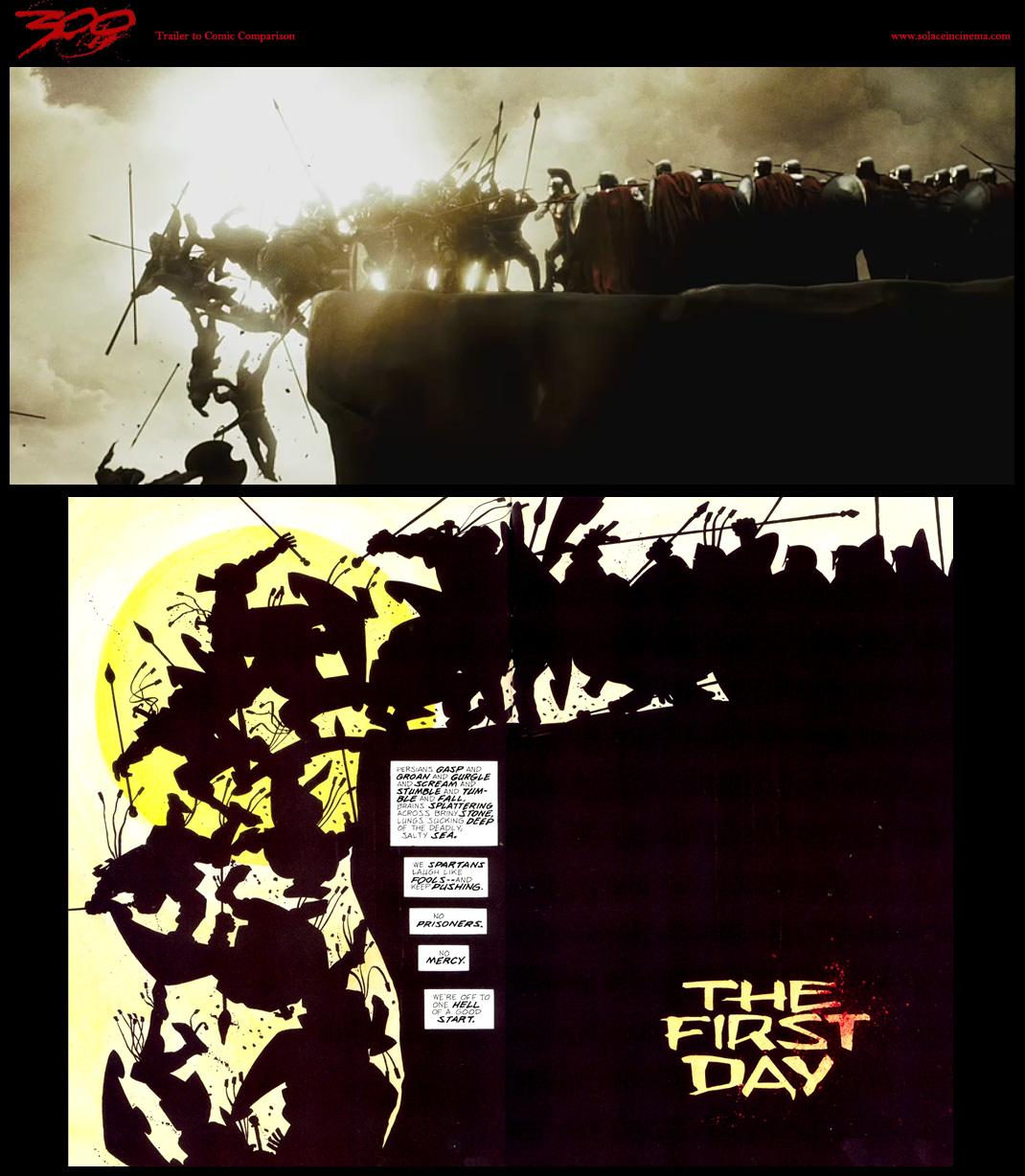
Unfortunately, these two critics imply that the film's similarity to the look and feel of video games (a medium enjoyed by more than just the core audience of younger males) limits the appeal of the film. This video game bias, perhaps related to the nearly constant criticism of the medium as an instigator of violence in adolescent boys, results in an ascription of stylized violence to video game culture. Thus, rather than judging the art of the film based on its aesthetic value, these critics decide to blame that which they don't like on a medium they seem neither to respect nor understand.
Perhaps more critics can appreciate the style of video games in film like Richard Roeper in the Chicago Sun Times:
"It is gorgeous to behold. It looks like the world's most sophisticated and expensive video game, and I mean that in a good way."

No comments:
Post a Comment